Ruven Afanador
Colombie / United States
A photographic theatre shaped by flamenco, baroque gestures and Latin American culture.
Explore 10 works ↓Life and work ↓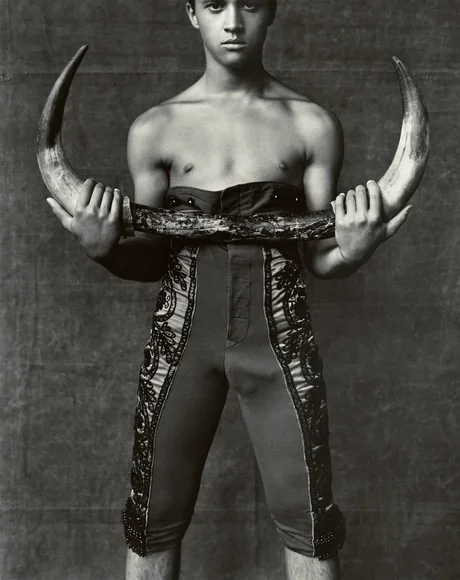
Ruven Afanador
© Ruven Afanador / ayants droit — courtesy Fahey/Klein Gallery
Copyrighted · Artwork record
A journey through images.
Available photographs can be enlarged.
Work and source
Referenced work : Carmen Iniesta and Arantxa Romero Garcia, Outskirts of Sevilla, Spain, 2007, Archival Pigment Print · Ruven AfanadorOfficial work ↗Work and source
Referenced work : YUCUMAMA (ETHNICITY: TICUNA), COLOMBIA, 2018 · Ruven AfanadorOfficial work ↗Work and source
Referenced work : Dancers: Ballet Nacional de España, Ballet Flamenco de Andalucía, Compañía Antonio Gades, and Compañía Sara Baras "Cortijo Alcala", Osuna, España, 2013, Archival Pigment Print, Combined Ed. of 25 · Ruven AfanadorOfficial work ↗Work and source
Referenced work : Untitled XIV, Louis Vuitton, Marc Jacobs, Temperley, Town & Country, 2013, Archival Pigment Print · Ruven AfanadorOfficial work ↗Work and source
Referenced work : Mariano Del Olmo, Mexico City, Mexico, 2001 , Archival Pigment Print · Ruven AfanadorOfficial work ↗Work and source
Referenced work : Crystal Renn, New York City, 2007, Archival Pigment Print · Ruven AfanadorOfficial work ↗Work and source
Referenced work : Rubén Olmo "El Cortijo de la Sierra", El Cuervo, Sevilla, España, 2011, Archival Pigment Print, Combined Ed. of 25 · Ruven AfanadorOfficial work ↗Work and source
Referenced work : Bafacona, (Ethnicity: Uitoto), Colombia, 2018 · Ruven AfanadorOfficial work ↗Work and source
Referenced work : Estudio de Baile Alicia Marquez, Cantera, Outside of Sevilla, Spain, 2007, Archival Pigment Print · Ruven AfanadorOfficial work ↗Each photograph links to its portfolio or collection record. Titles, dates and credits are retained when supplied by the source.
The story
Originally from Bucaramanga, Ruven Afanador moved to the United States as a teenager. After Washington and Milan, he settled in New York in 1990. His portraits and fashion commissions develop a deliberately theatrical elegance. In Torero, he borrows couture conventions to look at matadors; Sombra explores the male nude, while Mil Besos celebrates women in flamenco. Clothing, posture and setting create characters whose beauty escapes convention.
Understanding the work
Look at the hands and the twisting bodies: gesture tells as much as the face.
Key works and series
Torero; Sombra; Mil Besos