Alphonse Bertillon
1853–1914 · France
The photographic image turned into a tool for identification.
Explore 2 works ↓Life and work ↓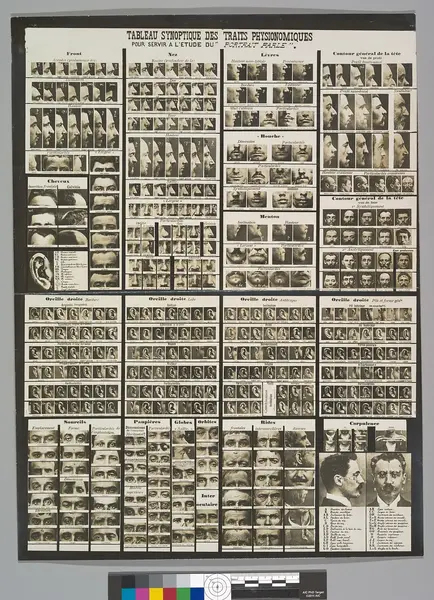
Alphonse Bertillon · ca. 1909
The Metropolitan Museum of Art · Twentieth-Century Photography Fund, 2009
CC0 — domaine public · Reuse conditions · Artwork record
A journey through images.
Explore the selection at your own pace. Click a photograph to enlarge it, then move from one work to the next.
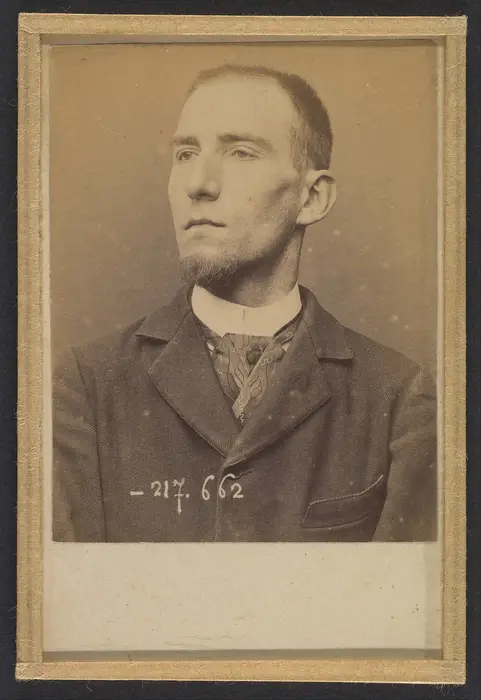
Alphonse Bertillon · 1894–5
The Metropolitan Museum of Art · Gilman Collection, Museum Purchase, 2005
CC0 — domaine public · Reuse conditions · Artwork record
Each photograph links to its portfolio or collection record. Titles, dates and credits are retained when supplied by the source.
The story
Alphonse Bertillon occupies a particular place in the history of the medium: he used it within the Paris police to organize the identification of individuals. His system combined bodily measurements, descriptions and standardized views. This history reminds us that a photograph does more than represent a person: its classification and institutional use also determine its meaning.
The selection preserved at the Metropolitan Museum of Art allows two works to be examined: Tableau synoptic des traits physionomiques: pour servir a l'étude du "portrait parlé", Fénéon. Félix. Clerk of the Galerie Berheim Jeune.. The records identify the following techniques: Gelatin silver print; Albumen silver print from glass negative. This information distinguishes the moment of exposure, the process and the preserved object.
Understanding the work
Compare the chart of facial features with the portrait of Félix Fénéon. Repetition makes comparison possible, but also reduces a person to signs selected by an institution.
Key works and series
Tableau synoptic des traits physionomiques: pour servir a l'étude du "portrait parlé" (ca. 1909) ; Fénéon. Félix. Clerk of the Galerie Berheim Jeune. (1894–5). The museum records specify each print’s process, dimensions, provenance and accession number.