Photographing places
A façade, threshold or shop window can reveal how a space is inhabited.
A place is more than a façade
Photographing a building may mean describing a form, but also observing its uses, transformations and position within a territory. Before choosing your frame, ask what interests you: the relationship between volumes, a threshold, circulation, a texture or a trace. A prestigious building does not automatically produce an interesting photograph. An ordinary space can become a rich subject if your eye reveals precise relationships. Your question will determine distance, time of day, scale and the place of people in the image.
Move from the whole to the fragment
A wide view situates the place; a closer view may convey its texture or a particular use. Make both before deciding. A frontal façade organises lines; an oblique view reveals a volume and its relationship to the surroundings. Details are not merely decorative: a worn handle, a patch of paint or a relocated sign can tell of a transformation. For each image, check whether it contributes distinct information. Three almost identical views of a beautiful building do not necessarily form a narrative about that place.
Understand perspective before correcting it
A building’s parallel lines may seem to converge when the camera is tilted. This is part of the projection of space, not a moral failing of the photograph. You may seek straight verticals for a calm description or keep a tilt that expresses your position. Avoid mechanically correcting every image: a strong transformation may stretch the edges and alter proportions. Ask whether the result should document a geometry, convey a sensation or connect the two. The project’s coherence matters more than an unexamined rule.
Light reveals volumes
The direction of light changes the legibility of relief, the presence of glass and the texture of a surface. Raking light can emphasise a wall; diffuse light can reduce differences and make the whole easier to read. Reflections allow several spaces to coexist on one surface. Do not treat them only as a nuisance to remove. Identify the times when shadows, passageways and interior lights create new relationships. Scouting without a camera can be as useful as a session devoted entirely to settings.
Atget: a field for learning to observe
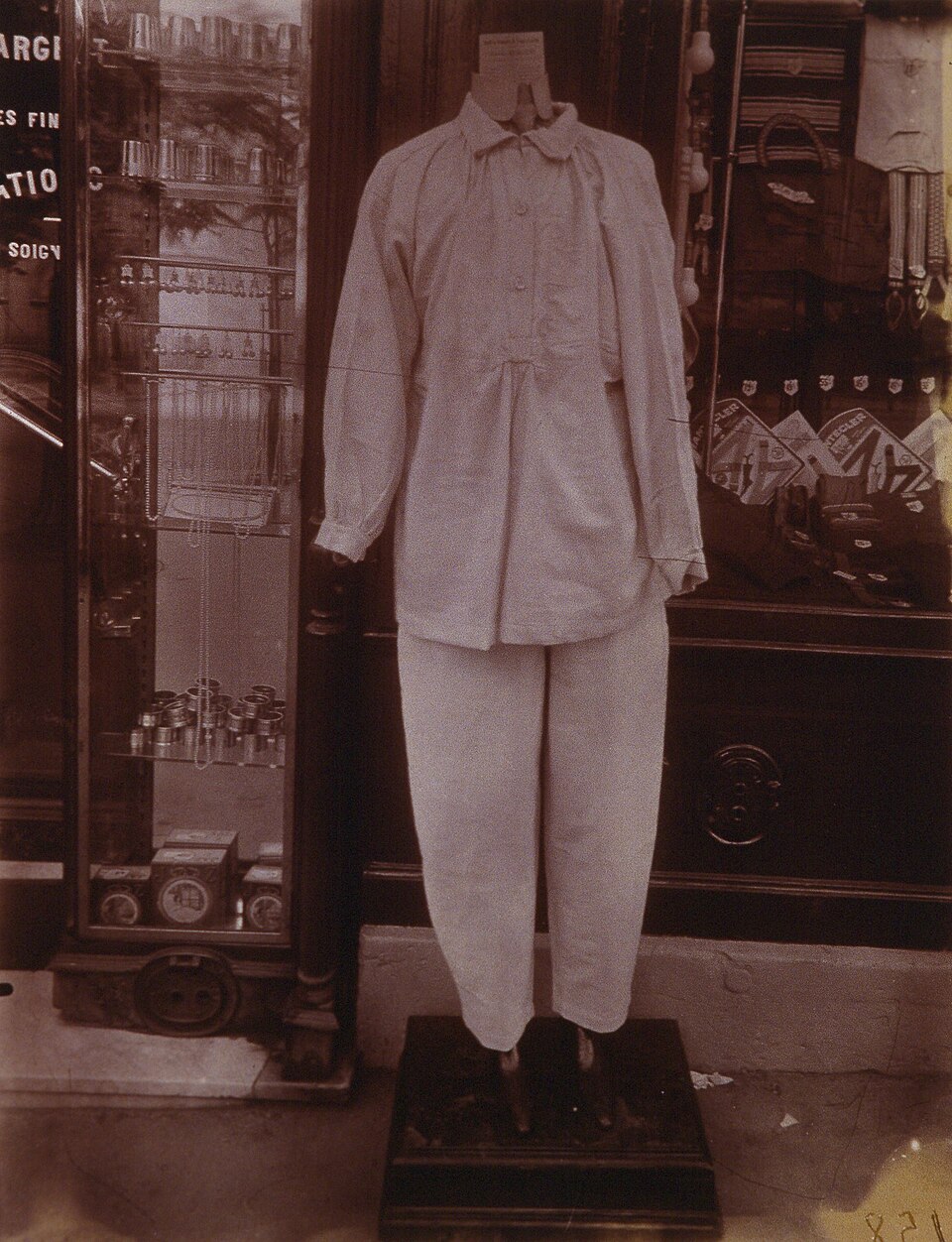
The shop windows and streets photographed by Eugène Atget offer a precise field for reading. Look at the pavement’s place, the distance from the façade, visible objects and reflective surfaces. The Metropolitan Museum’s presentation particularly highlights the richness of his observations of Parisian places. In your own analysis, avoid treating every empty street as evidence of solitude or abandonment. A space photographed without passers-by may result from the hour, exposure time or framing. The catalogue record and other images in the series help qualify the reading.
Show use and transformation
A place is inhabited even when no body is visible. Chairs, posters, protected passageways and repairs describe uses. Look for what belongs to the original design and what has been adapted. If making a comparison across time, return as closely as possible to a comparable position and field of view. Note differences in season, light and focal length. A pair of images does not demonstrate a neighbourhood’s entire history on its own; it opens a question that plans, archives and testimonies can extend.
Exercise: a portrait of a place in five images
Choose a nearby place. Prepare five images: its position in the street, its main volume, a threshold, a detail of use and a relationship with a person or human trace. Do not use the same framing principle for every view. Add a date and a short descriptive caption. Show the series without naming the location and ask what a reader understands of its functions and atmosphere. Then return to photograph what was missing rather than remaking the most immediately appealing image.
Glossary and pitfalls to avoid
Perspective: the representation of spatial relationships; vanishing point: the apparent convergence of directions; frontality: a view close to a perpendicular axis; siting: the relationship to the ground and neighbouring buildings; typology: a group organised according to a comparable criterion. Do not confuse architectural photography with property photography: their aims may differ. Frequent pitfalls are correcting verticals at the cost of inconsistent proportions, spectacular skies that take over the subject and captions asserting abandonment without information. A place deserves a description as precise as a person’s.
An original Luisour guide. The exercises are learning suggestions, not statements of the photographers’ intentions.