Documenting without reducing
A document’s strength depends on what it shows and the information that accompanies it.
Begin with a situated question
A documentary project begins less with “an important subject” than with a question to which you can devote time. Who works here? How is a neighbourhood changing? What does a family retain of a move? Define your scope, access and what you do not know. A situated question allows you to listen to what contradicts your expectations. It prevents you from looking only for scenes that illustrate an idea already settled. Your aesthetic choices will support the inquiry; they should not replace encounters with facts and people.
Build access and a relationship
Explain your approach in understandable words, including the possible destination of the images. Someone who accepts your presence has not necessarily understood every consequence of publication. Reassess the situation when the project changes medium or reach. Record agreements and particular conditions without turning the exchange into a mere formality. Time spent without photographing can reveal aspects invisible on a brief visit. It also allows you to hear what people do not wish to show and to identify the power relationships into which you are entering.
A photograph describes a fragment
A precise image may still be insufficient to explain a situation. Avoid making one face carry an entire social problem or reducing a place to its difficulties. Look for ordinary gestures, spaces, objects, contradictions and moments of relaxation. This does not mean artificially balancing positive and negative images; it means broadening the inquiry. Your selection should be able to account for its limitations: time spent, accessible places, people met and missing viewpoints. A series gains strength when it knows what it does not demonstrate.
Write verifiable captions
Separate observed facts, recorded speech and your interpretation. A useful caption identifies what can be identified: place, date, people, event and circumstances. Do not infer a profession, immigration status or emotion from appearance. When using testimony, record its origin and check names with the person. A caption may identify a reconstruction, a posed portrait or uncertain information. World Press Photo’s code of ethics particularly stresses accuracy and transparency; these principles invite documentation of the process as much as the result.
A reading case: the Migrant Mother sequence
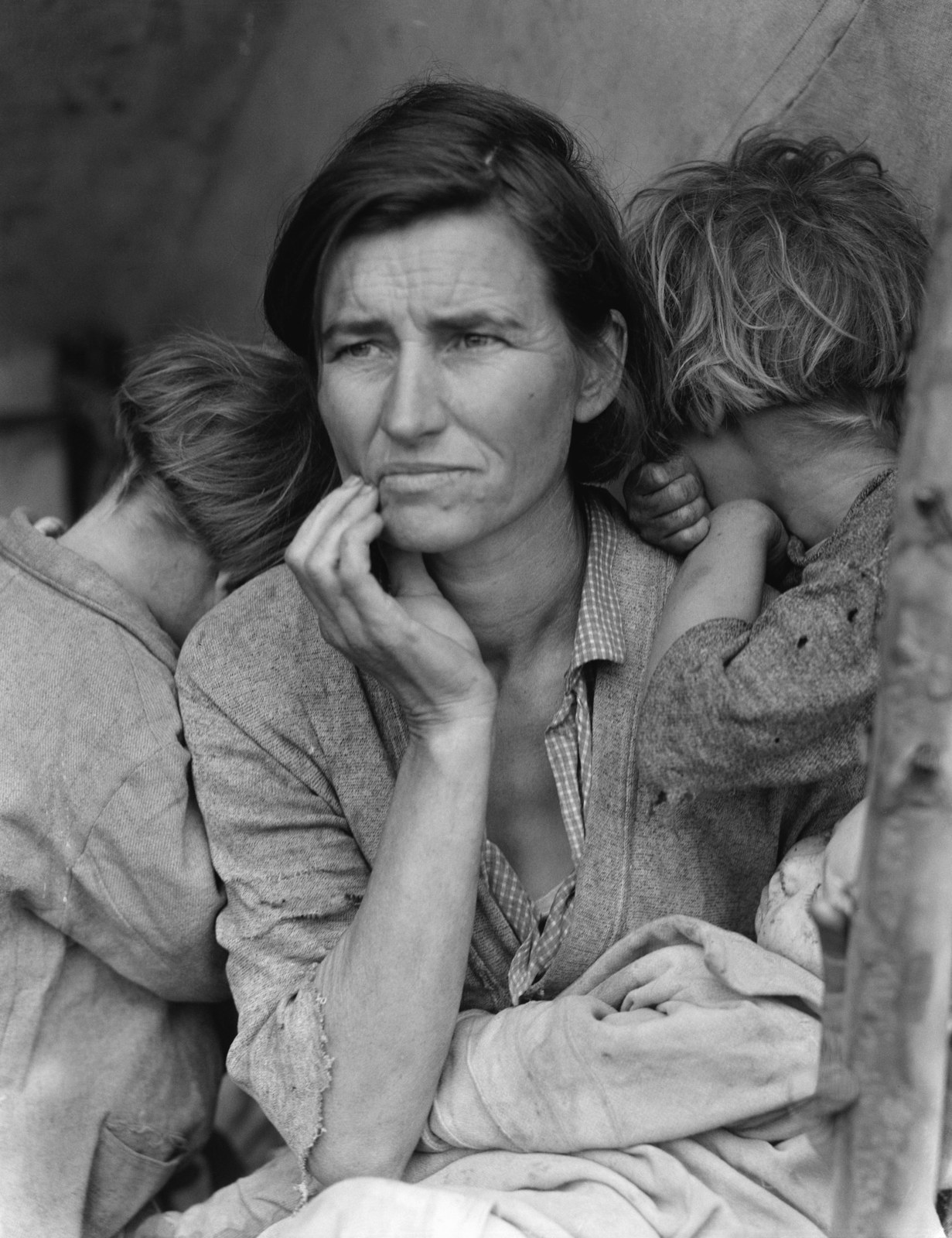
The Library of Congress guide brings together several photographs Dorothea Lange made of Florence Owens Thompson and her children in 1936. Consult the sequence rather than only the image that became famous. Compare distances, positions and the information available. This helps explain how a photographic document also results from a choice. It is not enough to reconstruct the whole encounter. Supplement the reading with the catalogue record and context, distinguishing what is established from what belongs to a later account.
Select and process without misleading
The arrangement of a series creates connections that can suggest causes, chronology or oppositions. Check that these effects do not imply a relationship that did not exist. If you combine places or periods, state that. File processing should remain consistent with the documentary approach you have declared. Removing or adding a physical element changes what the image claims was in front of the camera. Even cropping can remove important context. Keep originals, notes and working captions so that you can explain your decisions.
Exercise: a small narrative with its limitations
Choose an accessible place with the agreement of those concerned. Make three visits and after each write five new observations and one discarded hypothesis. Build a series of six photographs with a factual caption for each, then a 300-word note on the scope and conditions of the work. Where possible, ask people to check identifying facts. Then ask an outside reader what the series leads them to believe. If their conclusion goes far beyond your evidence, revise the sequence or add the missing context.
Glossary and editorial vigilance
Document: an element used as a trace or evidence; testimony: an account from a particular position; inquiry: the research and comparison of information; caption: text attached to an image; editing: the selection and ordering of photographs. Do not confuse proximity with understanding, distress with documentary value or apparent neutrality with the absence of a viewpoint. A photographer can be committed while verifying facts. They may also decide not to publish a powerful image if it needlessly exposes someone or turns a complex situation into a convenient symbol.
An original Luisour guide. The exercises are learning suggestions, not statements of the photographers’ intentions.