Exploring a photographic archive
Archives help us find an image, but also its versions, uses and silences.
An archive is an organised body of material
A photograph found online often belongs to an archive, collection, album or file. This organisation may tell us about its production and uses. Begin with a precise question: a neighbourhood at a particular time, an activity, a commission or a photographer. A search that is too broad produces many attractive images but little understanding. Note your keywords and the variants tried. A lack of results does not prove a lack of documents: descriptions, classifications and digitisation are always partial.
Search using several vocabularies
Try old street names, different spellings, a language associated with the archive and terms used at the time. The latter may be outdated or discriminatory; using them as research tools does not mean repeating them uncritically in your text. Combine a proper name with a period or document type. Catalogues sometimes offer filters by creator, place, technique and collection. Apply them gradually: dates that are too strict or an inadequately recorded category may exclude a useful document. Keep track of the paths that yielded results.
Read the different dates
The date of the negative, the print, publication and entry into a collection are different pieces of information. An image taken early in the century may be known through a print made much later. A date in brackets or accompanied by a question mark often indicates an estimate, according to the catalogue’s conventions. Do not turn a range into a certain year. Read the notes and description of the medium. When comparing reproductions, also check that they come from the same version of the work rather than two different prints.
The catalogue record matters as much as the file
Keep the title, the creator’s name when known, the identifier, the collection and the permanent link to the record. A direct file address may disappear or lack the information required for citation. Distinguish the image’s creator, the object’s owner, the institution digitising it and the source of the reproduction. These roles may belong to different people. The reverse, annotations, stamps and neighbouring album pages may be decisive. Take time to look at what surrounds your chosen image.
Compare versions and uses
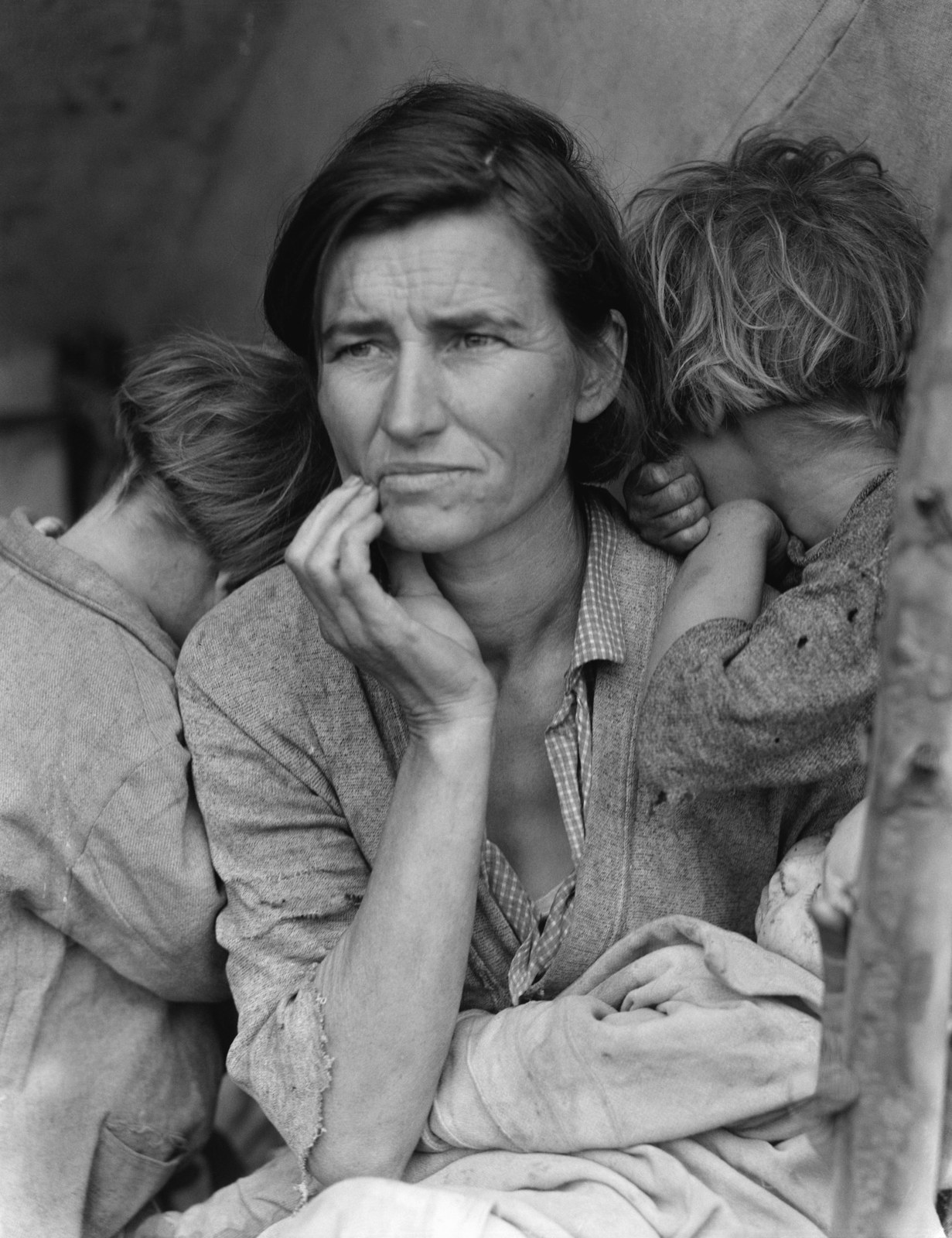
A photograph may have been cropped, retouched, reversed, captioned differently or published in a new context. Migrant Mother, documented by the Library of Congress, offers a way to study both a series and a retouched version. Comparison does more than identify a “pure” original: it helps tell the image’s material and editorial history. Make a simple table with the source of each version, its known date and visible differences. Identify what remains uncertain rather than filling gaps with an overly confident narrative.
Access does not mean permission to reproduce
The presence of a downloadable file is not enough to establish reuse rights. Read the conditions attached to the document and those of the institution. Gallica explains that some BnF reproductions are in the public domain, while copyrighted material or content from partners follows other rules. Status therefore depends on the document and intended use. Keep the required source credit and a link to the conditions. Where significant doubt remains, contact the institution or rights holder before publication. This verification is part of research.
Exercise: compile a provenance record
Choose a photograph on Gallica or at the Library of Congress. Gather on one page: your initial question, search query, title, creator, date and the nature of that date, technique, archive, identifier, permanent link and rights information. Add a 100-word description, then three questions the record does not answer. Find a second independent source or another version. Finish with a caption containing only supported facts. Your sheet should allow someone to find the document without relying on your downloads folder.
Glossary and research pitfalls
Fonds: a body of records associated with a creator; collection: material assembled according to a collecting principle; shelfmark: a classification reference; provenance: the known history of ownership or transmission; print: a photographic object made through a process; catalogue record: a documentary description. Do not consider metadata infallible: it can be corrected. Do not take a descriptive title assigned by a catalogue for the photographer’s own words. Sound research preserves uncertainties and allows others to trace the documents rather than simply accumulating images.
An original Luisour guide. The exercises are learning suggestions, not statements of the photographers’ intentions.