Sheida Soleimani
Recomposing an exile story through fragmented settings.
Explore 3 works ↓Life and work ↓A journey through images.
Available photographs can be enlarged.
Work and source
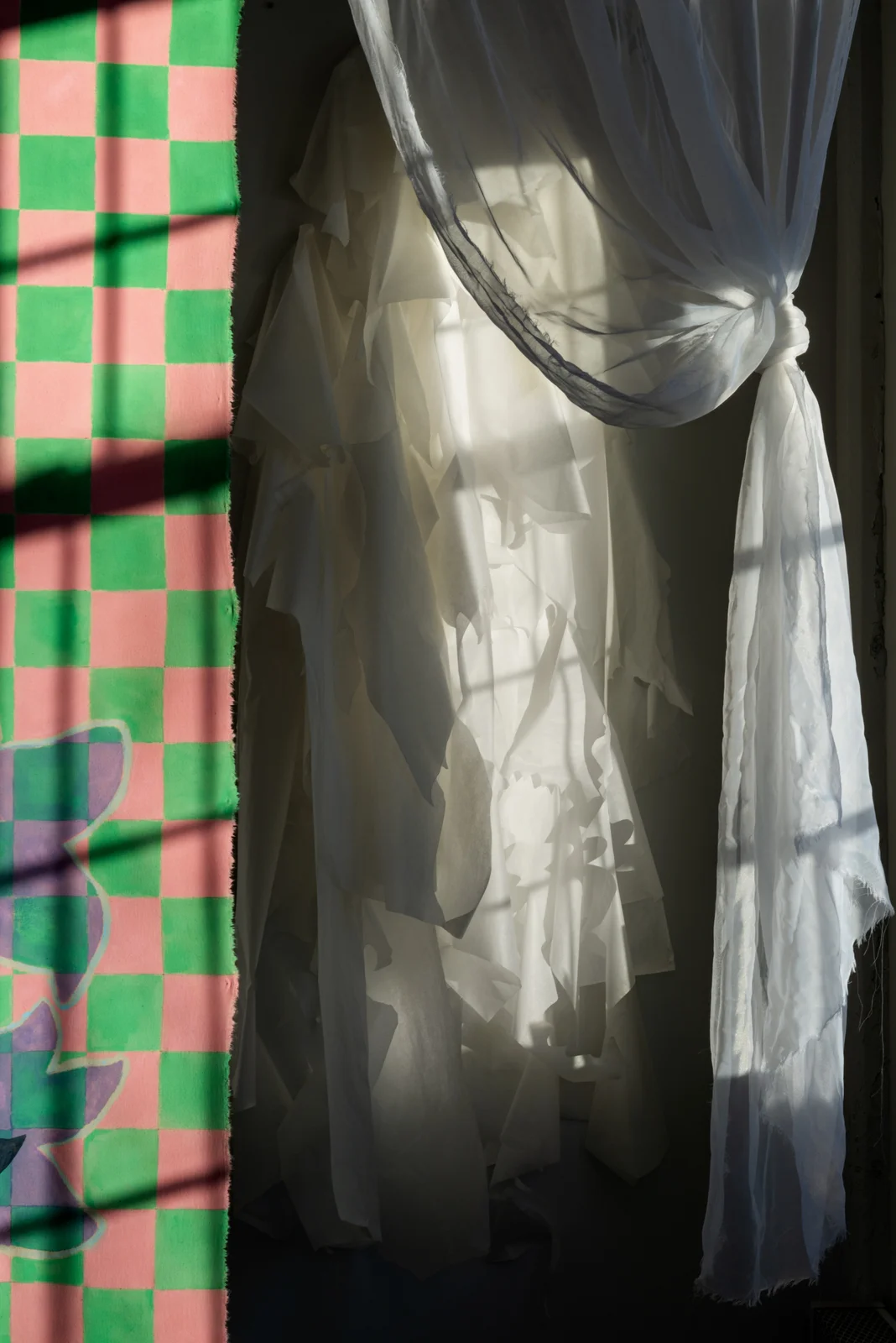
Referenced work : Noon-o-namak (bread and salt) · 2021 · Sheida SoleimaniOfficial work ↗Work and source
Referenced work : Khooroos (rooster) named Manoocher · 2021 · Sheida SoleimaniOfficial work ↗Each photograph links to its portfolio or collection record. Titles, dates and credits are retained when supplied by the source.
The story
Sheida Soleimani translates her parents' experience of exile after being forced to leave Iran in the 1980s into images. She places them in fabricated settings where photographs, patterns and objects carry memories.
Masks may conceal faces to protect their identities. In Noon-o-namak, domestic fragments and birds connect vulnerability, protection and freedom. Spatial montage does not reconstruct an event exactly; it gives form to discontinuous memory and family transmission.
Understanding the work
Explore the setting's different surfaces and joins. Objects have symbolic as well as visual functions; connections between them build a narrative that does not unfold at a single glance.
Key works and series
Mahsa ; Noon-o-namak (bread and salt) ; Khooroos (rooster) named Manoocher. The collection records provide dates, techniques and provenance for the prints shown.