Eugène Durieu
1800–1874 · France
The photographed model as a study of form and light.
Explore 2 works ↓Life and work ↓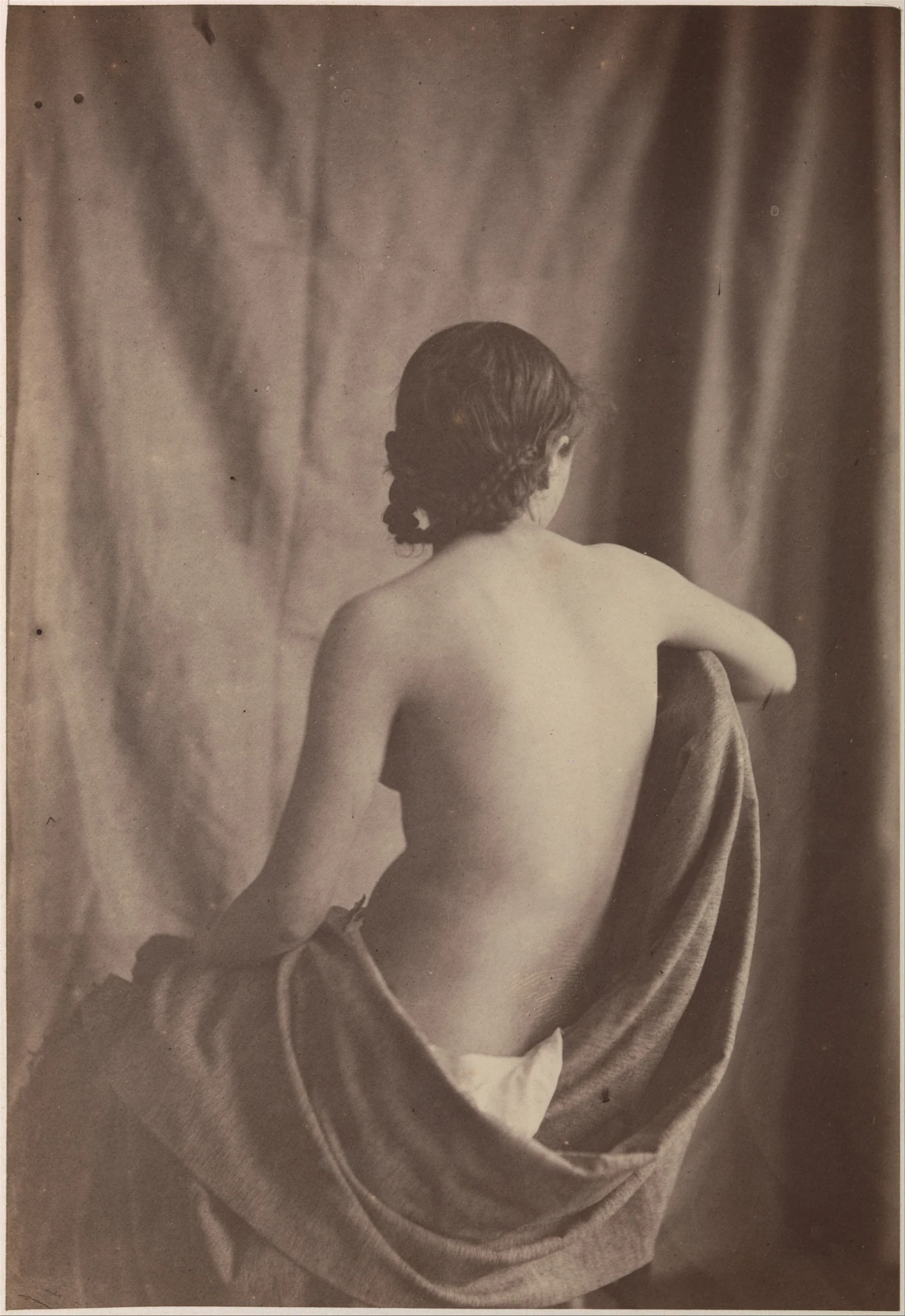
Eugène Durieu · 1853–54
Eugène Durieu — The Metropolitan Museum of Art. Gilman Collection, Purchase, Mr. and Mrs. Henry R. Kravis Gift, 2005
Public domain · Met Open Access (CC0) · Reuse conditions · Artwork record
A journey through images.
Available photographs can be enlarged.
Each photograph links to its portfolio or collection record. Titles, dates and credits are retained when supplied by the source.
The story
Eugène Durieu was a French photographer of the medium’s early years. His nude studies, made particularly in the 1850s, interacted with drawing and painting practices. Models were arranged before simple backgrounds with drapery and chosen poses. Photography allowed light on the body to be examined while producing an independent composition.
The selection preserved at the Metropolitan Museum of Art allows two works to be examined: [Seated Female Nude], [Nude Study]. The records identify the following techniques: Albumen silver print from glass negative. This information distinguishes the moment of exposure, the process and the preserved object.
Understanding the work
Compare the turned back with the frontal pose. Follow light across shoulder, arm and fabric: drapery structures the image as much as the figure.
Key works and series
[Seated Female Nude] (1853–54) ; [Nude Study] (1853–54). The museum records specify each print’s process, dimensions, provenance and accession number.