Eugène Constant
France
Rome between monumental description and early glass processes.
Explore 2 works ↓Life and work ↓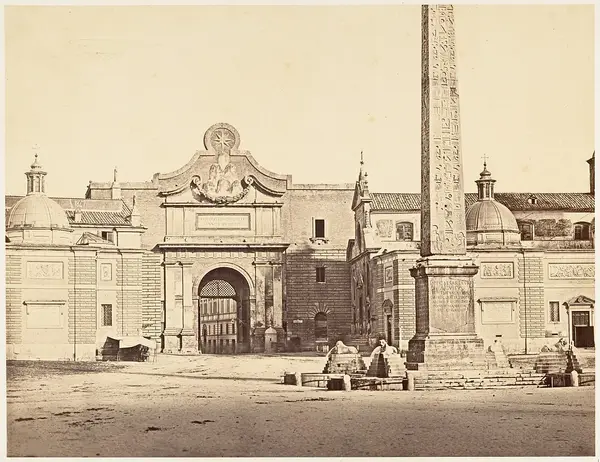
Eugène Constant · 1848–52
The Metropolitan Museum of Art · Gilman Collection, Museum Purchase, 2005
CC0 — domaine public · Reuse conditions · Artwork record
A journey through images.
Explore the selection at your own pace. Click a photograph to enlarge it, then move from one work to the next.
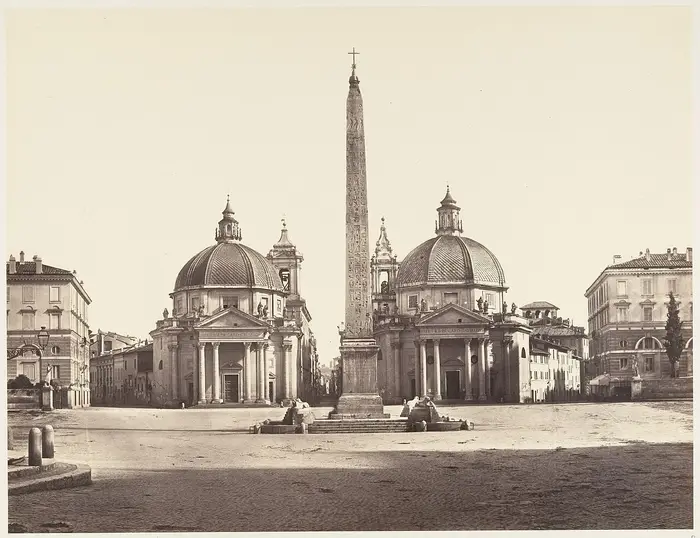
Eugène Constant · 1848–52
The Metropolitan Museum of Art · Gilman Collection, Museum Purchase, 2005
CC0 — domaine public · Reuse conditions · Artwork record
Each photograph links to its portfolio or collection record. Titles, dates and credits are retained when supplied by the source.
The story
A French painter and photographer active in Italy, Eugène Constant belonged to the circle of early photographers in Rome. His views of ancient monuments and squares emerged when the medium was renewing travel imagery. They give a central role to continuous façades, lines on the ground and the way architectural elements compose an urban space.
The selection preserved at the Metropolitan Museum of Art allows two works to be examined: Porta del Popolo, Piazza del Popolo. The records identify the following techniques: Albumen print from glass negative. This information distinguishes the moment of exposure, the process and the preserved object.
Understanding the work
Compare the gate and the Piazza del Popolo. The obelisk becomes a compositional axis; small figures make it possible to compare human scale with that of the monuments.
Key works and series
Porta del Popolo (1848–52) ; Piazza del Popolo (1848–52). The museum records specify each print’s process, dimensions, provenance and accession number.