Alfred-Nicolas Normand
1822–1900 · France
The architect looks at remains through the camera.
Life and work ↓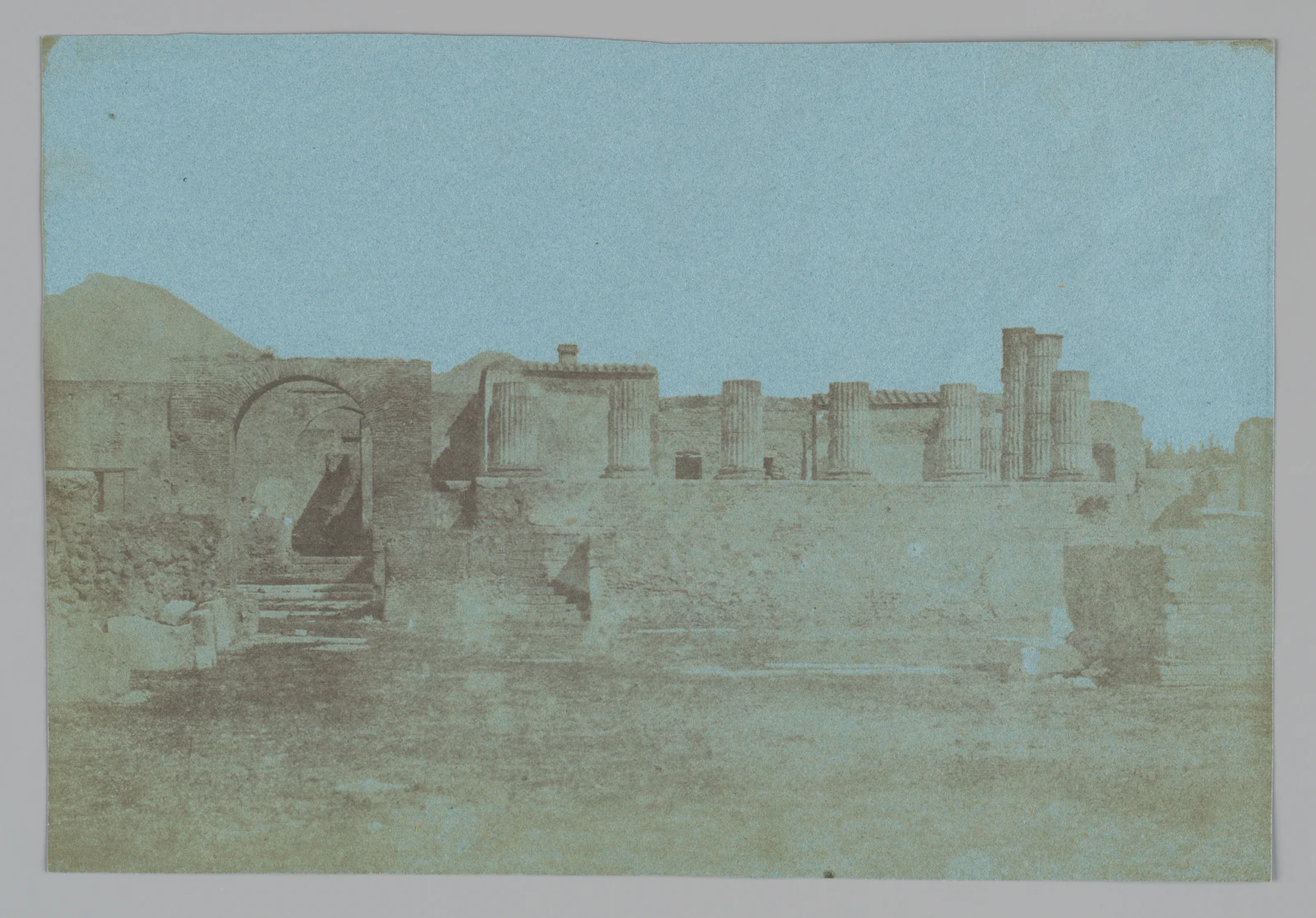
Alfred-Nicolas Normand · 1851
Alfred-Nicolas Normand — The Metropolitan Museum of Art. Purchase, Alfred Stieglitz Society Gifts, 2018
Public domain · Met Open Access (CC0) · Reuse conditions · Artwork record
The story
Alfred-Nicolas Normand was a French architect and photographer. Photography accompanied his interest in buildings and ancient sites. His view of the Temple of Jupiter at Pompeii, dated 1851 by the Met, shows a way of describing space through relationships between remains, terrain and horizon. It belongs to the history of architects’ early photographic journeys.
The selection preserved at the Metropolitan Museum of Art allows one work to be examined: Temple of Jupiter, Pompeii. The records identify the following techniques: Salted paper print from paper negative. This information distinguishes the moment of exposure, the process and the preserved object.
Understanding the work
Follow the alignment of columns and how fragments stand out against the sky. The frame allows heights, distances and the placement of ruins to be compared rather than isolating a single detail.
Key works and series
Temple of Jupiter, Pompeii (1851). The museum records specify each print’s process, dimensions, provenance and accession number.