Reading a photograph
Describe an image before interpreting it. Some ways to slow down your reading.
Start with what resists words
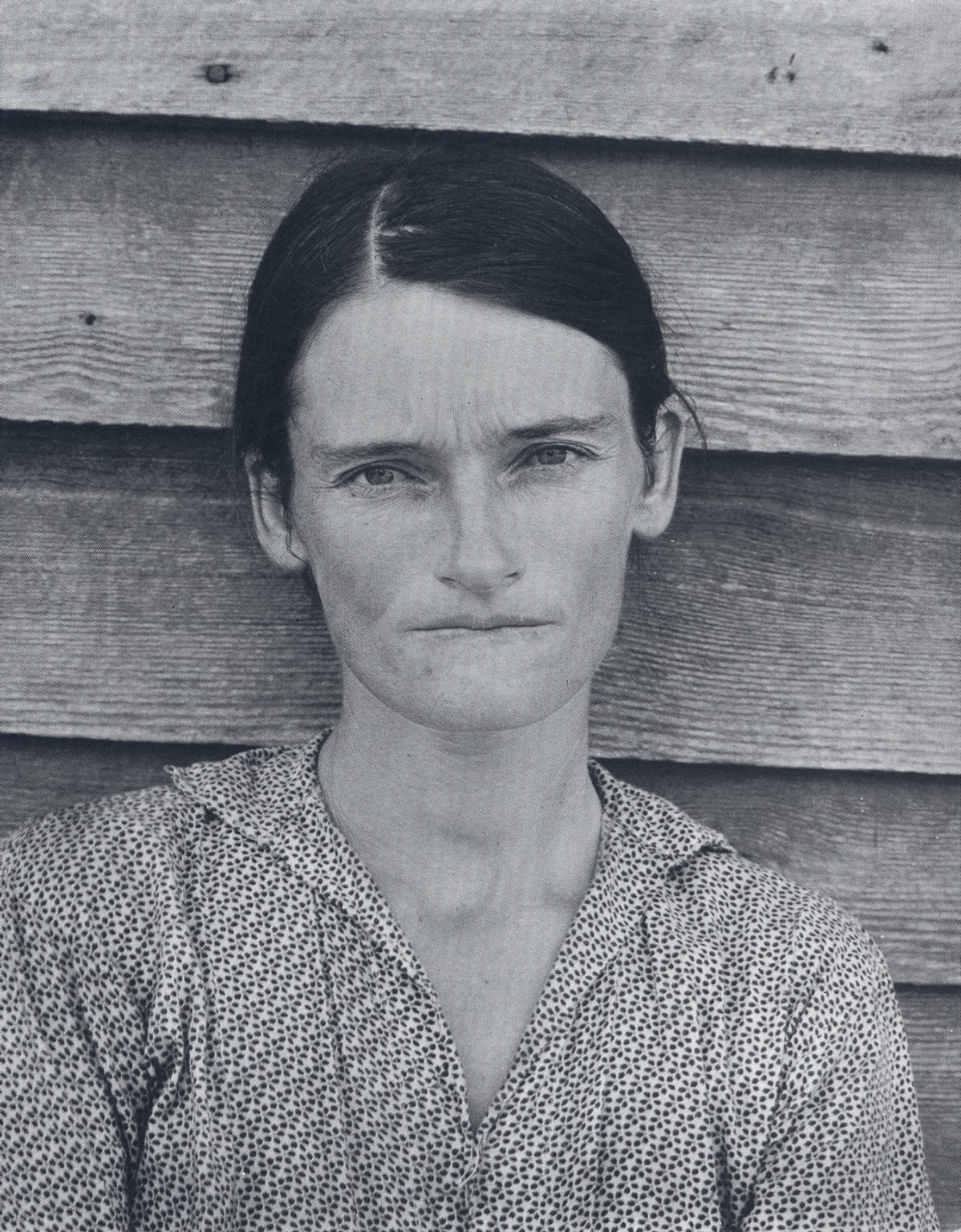
A photograph often seems to reveal its subject immediately: a street, a face, a landscape. Recognition is a starting point, not a complete reading. Spend a minute with the image without searching for a message. Note where your eye goes first, then what attracts it next. A photograph can be descriptive in its subject and ambiguous in the relationships it establishes. The aim is to make this experience precise: explain how an image affects you, supported by visible elements, rather than assigning it a single meaning.
Describe, interpret, document
Take a sheet of paper and make three columns. In the first, write visible facts: three people, a window, a shadow crossing a wall. In the second, put your hypotheses: waiting, anxiety, complicity. In the third, note information to research: place, date, commission, series. This separation prevents an impression from becoming an assertion. “A person looks outside the frame” describes a position; “they hope someone will return” invents a story. An interpretation remains valid if presented as a proposal, with its evidence and limitations.
Follow the movement of the eye
Observe light and dark masses, changes in sharpness, the directions of bodies and the lines of the space. A face is not necessarily the image’s active centre: a small bright area at the edge may attract more attention. Look for paths connecting foreground and background. Also examine obstacles: a door, reflection or silhouette may interrupt the reading. Draw a very simple diagram of the frame using five shapes. This drawing helps you see the arrangement before returning to details and people.
Read the edges and what is missing
The frame is a decision. Look at cropped limbs, objects entering halfway, spaces left in front of a person and elements near the corners. Ask what a step to one side would have changed. The question is not intended to correct the photographer but to make their viewpoint perceptible. Off-frame space may be suggested by a glance, shadow or gesture; it cannot be reconstructed with certainty. An image may show very little and prompt us to imagine a great deal: keep its visual economy distinct from your own projections.
An example: looking again at a familiar image
In front of Dorothea Lange’s Migrant Mother, begin with the directions of the heads, the hand and the surfaces of the clothes. Do not start with a summary of the Great Depression. The Library of Congress places the photograph in Nipomo in March 1936 and presents other images from the same sequence. Comparing them allows you to study a framing decision rather than treating the famous photograph as an isolated instant. The catalogue record provides context; visual analysis examines how the composition arranges what is shown. The two approaches complement one another.
Does the caption change your reading?
Next read the title, date, photographer’s name, medium and provenance. A press image, an advertising commission and personal work can use similar forms while inviting different kinds of reading. Ask who produced the caption and when: the photographer, a newspaper, an institution or a later user. New information may correct an older identification. Keep a reference to the record you consulted. The caption does not cancel what you saw; it helps you assess what came from the image and what came from your expectations.
Exercise: a reading in three passes
Choose a photograph from an institutional collection. First pass, two minutes: write ten observations without using emotional words. Second pass: formulate two different interpretations, with three clues for each. Third pass: consult the catalogue record and find something about the series or context. Then rewrite your reading in 150 words. Ask someone who has not seen the image to read the text, then show them the photograph. The comparison reveals details you overlooked, interpretations made too quickly and choices you managed to explain.
Glossary and points to watch
Frame: the boundaries of the image; viewpoint: the position from which it is made; plane: an area of depth; off-frame space: the suggested space outside the image; sequence: an ordered set of images. Avoid automatic formulas: “black and white creates nostalgia”, “blur expresses movement”, “the eyes say it all”. They may suit a particular image, but they need to be demonstrated. A good reading does not accumulate technical terms: it connects a few solid observations and accepts that a photograph remains partly open.
An original Luisour guide. The exercises are learning suggestions, not statements of the photographers’ intentions.